Introduction to Enterprise Resource Planning (ERP)
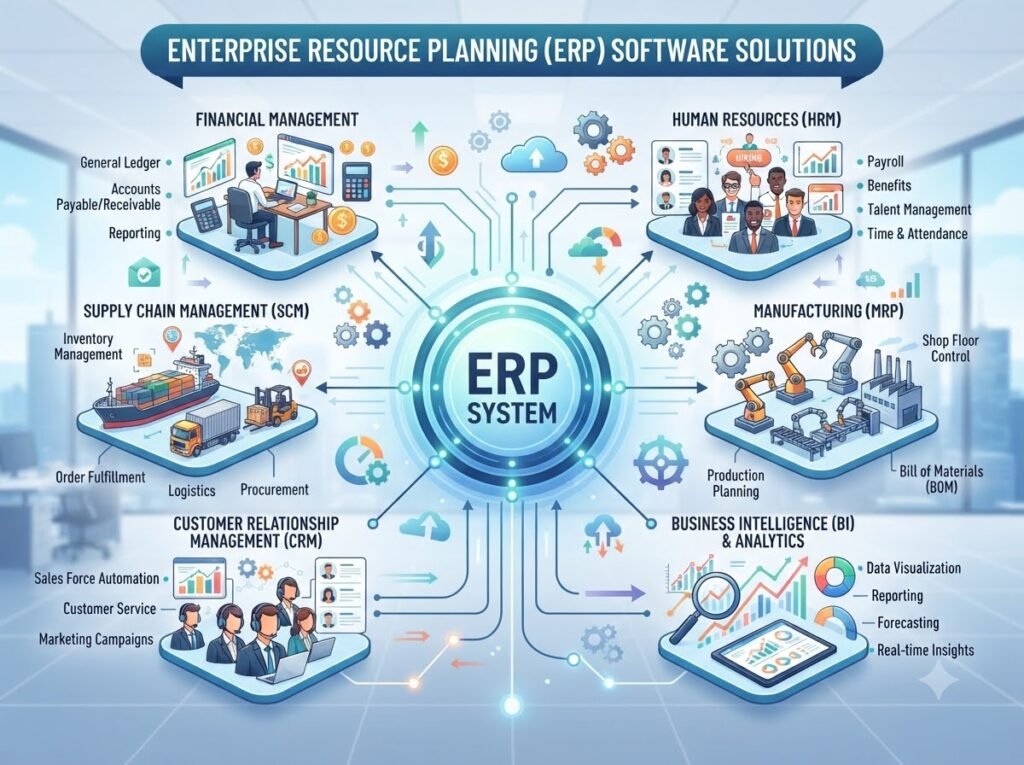
Enterprise Resource Planning (ERP) systems have become integral in the management of business processes across various industries. These software solutions facilitate the integration of core business functions, such as finance, HR, manufacturing, and supply chain management, into a unified system. The primary purpose of ERP software is to streamline operations, improve data accuracy, and enhance decision-making capabilities by providing a centralized platform for information sharing.
The evolution of ERP solutions began in the 1960s with the advent of material requirements planning software, which primarily focused on manufacturing resource management. Over the decades, these systems have progressed significantly, evolving into comprehensive ERP frameworks that cater to the diverse needs of modern enterprises. With the rise of cloud computing and advancements in technology, ERP solutions have become more accessible and scalable, allowing organizations of all sizes to implement them effectively.
Today, the significance of ERP systems cannot be overstated. They enable companies to monitor their operations in real-time, leading to increased efficiency and productivity. Moreover, by providing a single source of truth, ERP solutions minimize data silos that often lead to miscommunication and errors. The analysis capabilities of ERP systems further empower businesses to make informed strategic decisions based on accurate data.
In conclusion, Enterprise Resource Planning software solutions serve as the backbone of modern enterprises, integrating various business processes to foster collaboration and operational excellence. As organizations continue to adapt to changing market dynamics, the role of ERP systems in enhancing organizational effectiveness will remain critical.
Key Features and Functions of ERP Solutions
Enterprise Resource Planning (ERP) software is designed to integrate and streamline various business processes by providing a centralized framework for data and operations. One of the most essential features of ERP solutions is product management, which allows organizations to efficiently oversee their product lifecycle from development to delivery. This includes managing product data, tracking product performance, and optimizing the supply chain, all of which are crucial for maintaining a competitive edge in today’s market.
Another critical component of ERP systems is inventory control. This functionality helps businesses manage stock levels, track inventory movements, and automate replenishment processes. By integrating inventory management with other business operations such as sales and procurement, organizations can enhance accuracy in stock data, thereby reducing the risk of overstock or stockouts. This synchronization ensures that the right products are available at the right time, leading to improved customer satisfaction.
Financial management is also a core feature of ERP solutions. These systems facilitate comprehensive financial tracking, budgeting, and reporting, integrated seamlessly with other functions. Companies can gain real-time insights into their financial performance, helping management make informed decisions and strategically plan for future growth. The automation of accounting tasks reduces manual errors and enhances compliance with regulatory requirements.
Human resources management is the final pillar of effective ERP software. This functionality streamlines processes related to workforce management, such as recruitment, onboarding, payroll, and performance tracking. By consolidating HR tasks within an ERP system, organizations can better manage their human capital and ensure that their workforce is aligned with organizational objectives.
In conclusion, the integration of these features—product management, inventory control, financial management, and human resources—demonstrates the comprehensive nature of ERP solutions. By utilizing these functionalities, businesses can enhance operational efficiency, improve decision-making, and maintain a competitive advantage in their respective industries.
Benefits of Implementing ERP Software
Enterprise Resource Planning (ERP) software solutions offer numerous advantages to organizations across various industries. One of the most significant benefits is enhanced data accuracy. By consolidating all business functions into a single system, ERP solutions eliminate the need for multiple data entries across different departments, thereby reducing the risk of human error. This accuracy in data management not only speeds up processes but also ensures that decision-makers have reliable information at their disposal.
Another notable advantage of implementing ERP systems is the improved reporting capabilities they provide. With integrated data from across the organization, reporting becomes more streamlined and comprehensive. Users can generate insightful reports that reflect real-time status and trends, which can be crucial for strategic planning and forecasting. The customization options available in many ERP solutions allow businesses to tailor reports to meet specific needs, further enhancing their utility.
Cost reduction is another compelling reason for implementing ERP software. While there may be an initial investment in the software and training, the long-term savings can be substantial. Streamlined processes and increased efficiency lead to reduced operational costs, and better inventory management minimizes excess stock and associated carrying costs. Over time, these savings can significantly impact a company’s bottom line.
Furthermore, ERP solutions facilitate improved decision-making. By providing a unified view of business operations and fostering collaboration among departments, managers can make informed decisions based on accurate and up-to-date information. This level of insight is invaluable in today’s fast-paced business environment.
Lastly, ERP software solutions can significantly enhance scalability. As organizations grow, their processes become more complex. ERP systems are designed to adapt to changing business environments, allowing for the addition of new functionalities and user access as required. This flexibility ensures that businesses are well-equipped to handle growth without compromising efficiency or data integrity.
Choosing the Right ERP Solution for Your Business
Selecting an Enterprise Resource Planning (ERP) solution is a pivotal decision for any organization, as it integrates various functions and improves overall efficiency. Businesses must consider several essential criteria when evaluating potential ERP solutions to ensure the chosen system aligns with their specific needs.
Firstly, the size of the organization plays a crucial role in the selection process. Smaller businesses may prioritize cost-effective solutions that offer essential features without overwhelming complexity. Conversely, larger enterprises might require more robust systems capable of handling intricate operations and processes across various departments.
Industry requirements also influence the choice of an ERP system. Different sectors come with unique challenges and regulatory demands. It is vital to assess whether the ERP solutions under consideration have tailored functionalities that meet industry standards. For instance, manufacturing firms may need specialized modules for production planning, while retailers might focus on modules that enhance inventory management.
Customization options are another critical factor. Many organizations have specific workflows and processes that necessitate tailored features within their ERP solutions. A flexible system that allows for customization can better serve an organization’s distinct needs. Thus, examining the capability of a vendor to provide personalized training and support is essential.
Vendor reputation and reliability are equally important considerations. Researching a vendor’s history, customer reviews, and case studies can provide insights into their credibility and the functionality of their ERP offerings. Engaging with existing customers and seeking feedback will further aid in making an informed decision.
Lastly, successful ERP implementation requires strategic planning and training. Businesses should devise a clear roadmap and consider involving key stakeholders throughout the process. Engaging competent consultants or utilizing the vendor’s support during the implementation can significantly enhance the likelihood of a favorable outcome. By carefully considering these factors, organizations can make a more informed choice when selecting the ERP solution that best fits their needs.