Understanding the Importance of Quality in Webcams
The quality of a webcam plays a pivotal role in remote work, significantly influencing communication and the overall professional image presented during virtual interactions. With the rise of remote working arrangements, professionals increasingly rely on high-quality webcams to enhance their video conferencing experience. Clear images and crisp audio not only facilitate better dialogue but also help in creating a more engaging environment for collaboration.
The visual fidelity of a webcam can impact how messages are conveyed during meetings. A high-definition webcam offers a clearer view, ensuring that facial expressions and body language are easily communicated, which is crucial for effective interactions. In contrast, a low-quality webcam may distort images, causing misunderstandings and ineffective communication amongst team members. This can lead to frustration and decreased productivity, as messages may not be conveyed as intended.
Moreover, the impression one leaves during virtual meetings significantly contributes to one’s professional image. A quality webcam reflects a commitment to professionalism, showing peers and clients that one values the significance of clear communication. This is essential in establishing trust and respect in any professional relationship. For businesses aiming to maintain a strong brand image, using high-quality webcams can serve as a crucial investment in their team’s remote working setups.
Additionally, the efficiency of virtual meetings can be enhanced through the use of quality webcams. When technical issues are minimized, such as lagging video and poor audio quality, participants can focus more on the content being discussed rather than overcoming technological barriers. This allows for a smoother flow of discussions and more productive outcomes. Therefore, the investment in quality webcam technology not only serves immediate communication needs but also fosters an effective working environment that promotes collaboration and efficiency.
Key Features to Look for in a Professional Webcam
When selecting a professional webcam for remote work, several key features should be considered to ensure high-quality video performance. The foremost consideration is resolution, which determines the clarity and detail of the image. A webcam with a minimum resolution of 1080p (Full HD) is recommended for professional settings, as it provides sharp visuals that enhance communication during virtual meetings.
Frame rate is another crucial aspect; it refers to the number of frames captured per second. A webcam delivering at least 30 frames per second (fps) will provide smooth video playback, which is essential for reducing lag during conferences. Higher frame rates, such as 60 fps, are beneficial for those who engage in live streaming or need fluid motion capture.
Autofocus functionality can significantly impact video quality by ensuring that the subject remains clear, even if there is movement. This feature is particularly useful during presentations or discussions where the speaker may shift positions. A webcam with reliable low-light performance is also favorable; it can adjust to varying lighting conditions, maintaining clear video even in dim environments. This ensures that users appear professional regardless of their surroundings.
Additionally, built-in microphones are an important feature to consider. A high-quality microphone can aid in capturing clear audio, which complements the visual component of the video. Some webcams come with noise-cancellation technology that effectively filters background sounds, thus enhancing the overall communication experience.
Incorporating these features—resolution, frame rate, autofocus, low-light capability, and audio quality—ensures that the webcam meets the demands of professional use, facilitating effective communication and interaction in remote work settings.
Top Recommended Webcams for Different Budgets
In today’s digital age, a professional webcam is a crucial tool for remote work, online meetings, and virtual collaboration. There are various models available to cater to different budget ranges, making it essential for users to select a device that best fits their specific needs and financial constraints. Below, we outline a selection of recommended webcams that are ideal for diverse applications and budgets.
1. Logitech C270 HD Webcam
The Logitech C270 is an excellent choice for budget-conscious consumers. It offers 720p HD video quality, making it suitable for video calls and basic streaming. Additionally, its easy plug-and-play setup ensures that users can get started quickly without the need for complex installation processes. On the downside, the build quality is relatively basic, which may deter some users looking for a more durable option.
2. Razer Kiyo
For users who require higher quality, the Razer Kiyo is designed with streamers in mind. It features 1080p resolution capabilities and an adjustable ring light, providing optimal lighting during low-light conditions. This webcam is the perfect fit for content creators. However, its higher price point may not be justifiable for those who only need a webcam for occasional use.
3. Logitech Brio Ultra HD Webcam
The Logitech Brio stands out as a premium choice for professionals. Offering 4K Ultra HD video, it supports HDR imaging for improved visibility in varying light conditions. This camera is perfect for those seeking the highest video quality for presentations or conferences. Its advanced features and sleek design make it a worthwhile investment, although it is significantly more expensive than entry-level options.
4. Microsoft LifeCam HD-3000
This affordable webcam offers 720p HD video and TrueColor technology, which automatically delivers bright and colorful video in different lighting conditions. It is an ideal choice for casual users and professionals who do not need extensive features. However, it lacks many modern functionalities found in higher-end webcams.
These recommendations cover a broad spectrum of price ranges and feature sets, ensuring that users can find a webcam that aligns with their specific requirements and budgets. By carefully considering the specifications and intended use cases, individuals can make informed purchasing decisions that will enhance their remote working experience.
Tips for Optimizing Webcam Performance for Remote Work
To ensure a high-quality video conferencing experience during remote work, users should consider several practical tips that can significantly enhance webcam performance. First and foremost, lighting is a crucial factor. Optimal lighting can improve image clarity and reduce shadows. Natural light is preferred, so positioning yourself near a window can help. However, for those working in dim environments, investing in softbox lights or ring lights can create a flattering and bright setup. The goal is to illuminate your face evenly while minimizing harsh shadows.
Another vital consideration is the background. A clean and professional background is important for maintaining a suitable work environment. Users should aim for a clutter-free area to minimize distractions for colleagues. If your physical background isn’t ideal, consider using virtual backgrounds available in most video conferencing software. These can help create a more professional atmosphere, although it is advisable to ensure that the virtual option does not compromise the camera quality.
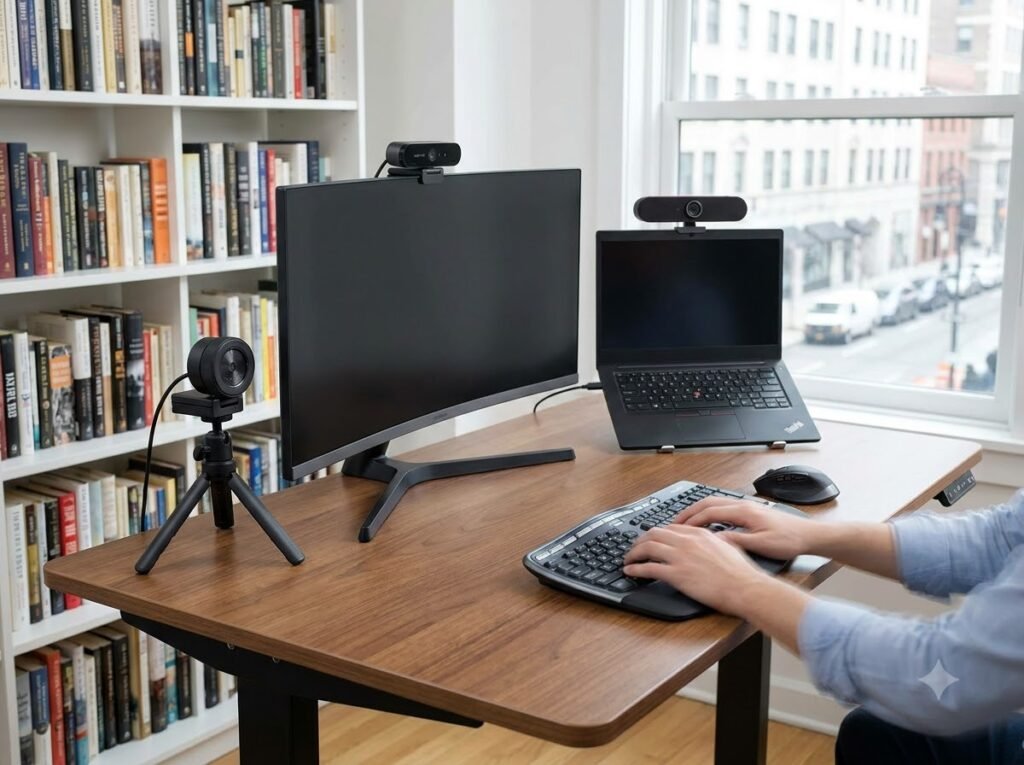
Camera positioning also plays a significant role in how you present yourself in video calls. The webcam should be placed at eye level or slightly above to create a more natural interaction, avoiding angles that could be unflattering. Additionally, ensure that your camera is stable by using a tripod or securing it on a stable surface to prevent unwanted movements during calls.
Finally, adjusting software settings can further enhance video and audio quality. Many video conferencing apps include options to optimize audio or video settings. Users should familiarize themselves with these options to tailor their setup based on their specific needs. Some applications also allow for background noise suppression, which is essential in ensuring that your voice is clearly heard during meetings. Implementing these tips can lead to a more effective and enjoyable remote work experience.