
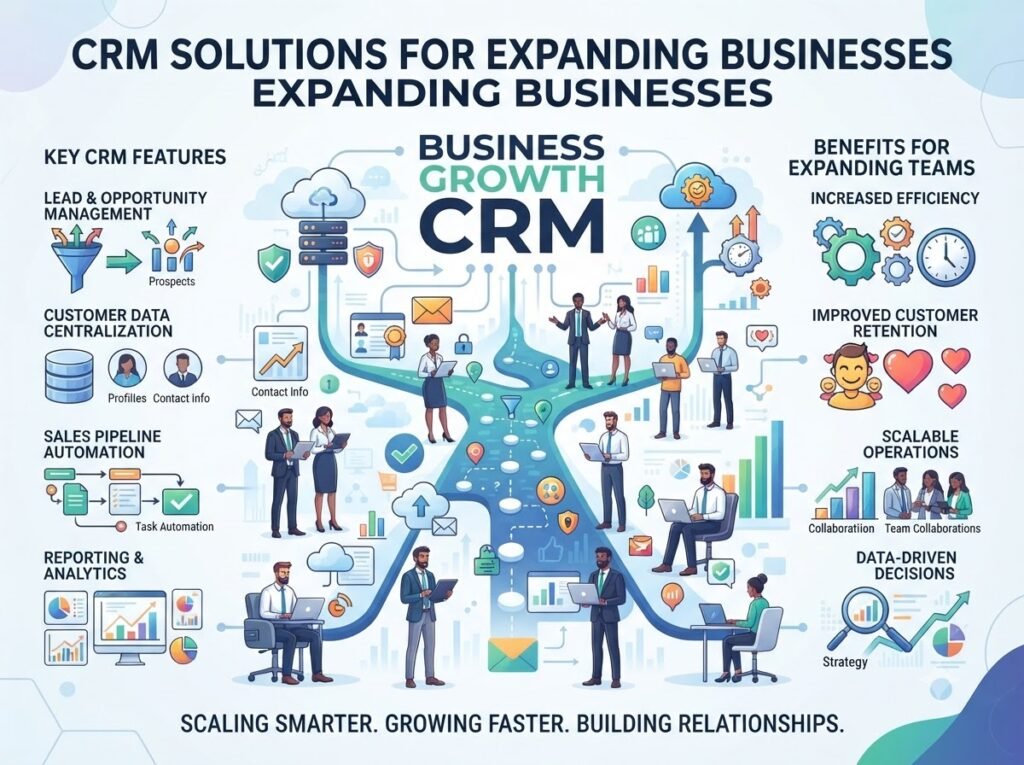
Understanding the Importance of CRM for Growth
In today’s highly competitive business landscape, Customer Relationship Management (CRM) solutions play a pivotal role in the growth trajectory of expanding companies. Effective CRM systems are designed to help businesses manage their interactions with current and potential customers, fostering stronger relationships and loyalty, which are essential for sustained growth.
One of the primary advantages of implementing a robust CRM system is its ability to enhance customer interactions. By consolidating customer data, preferences, and interactions in one platform, businesses can tailor their communication and services to meet the specific needs of their customers. Such personalized engagement not only improves customer satisfaction but also drives repeat business, which is integral for any company aiming to scale.
Moreover, CRM solutions streamline business processes by automating routine tasks. This automation allows teams to focus on more strategic initiatives rather than being bogged down by administrative duties. For instance, CRM tools often include features for task management, sales tracking, and customer follow-ups, which can significantly increase productivity across various departments. As a result, businesses can operate more efficiently and respond to market demands quickly, a crucial factor for growth.
Additionally, effective CRM systems facilitate data-driven decision-making. By analyzing customer data and trends, businesses can gain valuable insights that inform their strategies. This analytical capability allows organizations to identify new opportunities for growth, assess the effectiveness of existing initiatives, and potentially pivot their approach based on real-time feedback. In essence, a sophisticated CRM system does not merely serve as a tool; it acts as a strategic partner in a company’s growth journey.
To conclude, embracing a robust CRM system is critical for expanding businesses. It significantly enhances customer relationships, optimizes business operations, and empowers companies to make informed decisions that propel growth.
Key Features to Look for in CRM Software
In the dynamic landscape of business growth, selecting the right Customer Relationship Management (CRM) software is crucial for organizations aiming to expand their reach and improve operational efficiency. Several essential features should be prioritized when choosing a CRM solution that aligns with the needs of an expanding business.
Firstly, user-friendliness is paramount. A CRM system should have an intuitive interface that allows users to navigate seamlessly without extensive training. This feature is particularly important for businesses experiencing rapid growth, as it facilitates quick onboarding and adoption of the software by new team members.
Scalability is another key consideration. As businesses grow, their requirements evolve. Therefore, a robust CRM solution must be able to scale alongside the organization, accommodating increased data volumes, additional users, and more complex processes. This flexibility ensures that the software remains effective even as the business expands.
Integration capabilities also play a significant role. Effective CRM software should effortlessly integrate with other tools and platforms used by the organization, such as marketing automation systems, email services, or e-commerce platforms. This interconnectedness enhances data flow and provides a more cohesive operational environment, which is vital for businesses aiming to maintain efficiency during growth phases.
Additionally, comprehensive reporting tools are essential for analyzing customer interactions and identifying trends. A CRM that offers advanced analytics can help businesses make informed decisions, forecast future sales, and refine strategies based on data-driven insights. These functionalities allow for a better understanding of customer needs and improve service delivery.
Finally, robust customer support is indispensable. As organizations utilize CRM software, they will inevitably encounter challenges or questions. Reliable customer support can significantly affect user experience and satisfaction. Businesses should look for CRM providers that offer extensive support options, including tutorials, online resources, and responsive customer service teams.
By focusing on these key features—user-friendliness, scalability, integration capabilities, reporting tools, and customer support—businesses can identify the CRM software that best aligns with their expansion plans.
Top CRM Solutions for Growing Companies
In the evolving landscape of customer relationship management, several CRM solutions stand out, particularly for businesses in their growth phase. These tools are essential for managing customer interactions, streamlining processes, and ultimately driving sales. Here, we examine a selection of notable CRM systems tailored for expanding companies.
One of the foremost solutions is Salesforce, known for its robust features and customization options. It offers a comprehensive suite of tools for sales and marketing, including lead management and analytics. Its scalable nature makes it suitable for small startups as well as large enterprises, with pricing that adjusts according to the depth of service required.
Another leading contender is HubSpot CRM, which provides a free tier that is particularly appealing for startups. Its user-friendly interface allows teams to manage contacts and metrics efficiently. HubSpot excels in integration with other marketing tools, fostering a seamless workflow. As a business grows, they can easily upgrade to HubSpot’s advanced offerings, which expand functionality at a reasonable cost.
Pipedrive also deserves mention, especially for its focus on sales pipeline management. This CRM highlights the stages of the sales process, aiding teams in prioritizing their efforts. Pricing is straightforward, and it functions well for small to mid-sized businesses seeking a pragmatic approach to customer management.
Additionally, Airtable presents a unique and flexible option, merging the features of a CRM with project management capabilities. Its adaptable database system allows businesses to customize their data workflow extensively, making it ideal for teams that require more than just traditional CRM functionalities.
Emerging players like Zoho CRM and Monday.com are also worth considering. Zoho offers a range of pricing tiers, accommodating various budgets while delivering essential CRM features. Meanwhile, Monday.com provides a visually driven platform, ideal for teams that value collaboration and project tracking alongside customer relations.
Each of these CRM solutions offers unique advantages, catering to diverse business needs at different growth stages. Businesses should evaluate their specific requirements to select the best CRM platform that aligns with their expansion goals.
Case Studies: Success Stories of Companies Using CRM
Numerous organizations across various sectors have successfully implemented Customer Relationship Management (CRM) solutions, leading to substantial growth and enhanced operational efficiency. By examining these real-world examples, we gain valuable insights into how CRM technologies can transform businesses.
One notable case is that of Company A, a mid-sized retail corporation which struggled with customer retention due to inadequate data management. Prior to adopting a CRM solution, they faced significant difficulties in understanding customer preferences and behavior. By integrating a tailored CRM system, the company leveraged features such as data analytics and customer segmentation, allowing them to personalize marketing campaigns effectively. This strategic move resulted in a 30% increase in customer engagement and a 20% uptick in sales over a year.
Similarly, Company B, a SaaS provider, encountered challenges in managing customer interactions efficiently. Their legacy systems led to miscommunication and delays in service delivery. To address these issues, Company B adopted a cloud-based CRM system that facilitated real-time communication and collaboration across departments. This implementation was pivotal as it enabled them to streamline their customer support processes, significantly reducing response times. As a result, they observed a 40% improvement in customer satisfaction rates and a notable rise in subscription renewals.
In another example, Company C, operating in the healthcare sector, utilized a CRM to enhance patient relationship management. The organization previously struggled with appointment scheduling and follow-up communications. With the adoption of a comprehensive CRM solution, they incorporated automated reminders and feedback tools, which led to increased patient compliance and care quality. As a result, their patient retention rate improved by 25%, and they reported enhanced operational productivity.
These case studies illustrate the profound impact that CRM solutions can have on business growth. The core challenges faced by these companies were addressed by the strategic use of CRM functionalities, resulting in measurable improvements and a competitive edge within their respective industries.